In a lot of capes and colonials the front door is for guests. Everyone else comes in through the mudroom, the side door or the door from the garage, so that is usually the best spot for a keypad. Hands full of bags, a dog on a leash, kids home before their parents: a code is easier than a key in every one of those moments.
A keypad on that everyday door also ends the hunt for spare keys. Each person gets a code of their own, and when a babysitter or a contractor is done, their code is deleted while the rest of the household carries on.
Split-level homes often put the door from the garage half a flight below the kitchen, and a keypad there saves anyone coming in from the car a walk around to the front with the groceries.
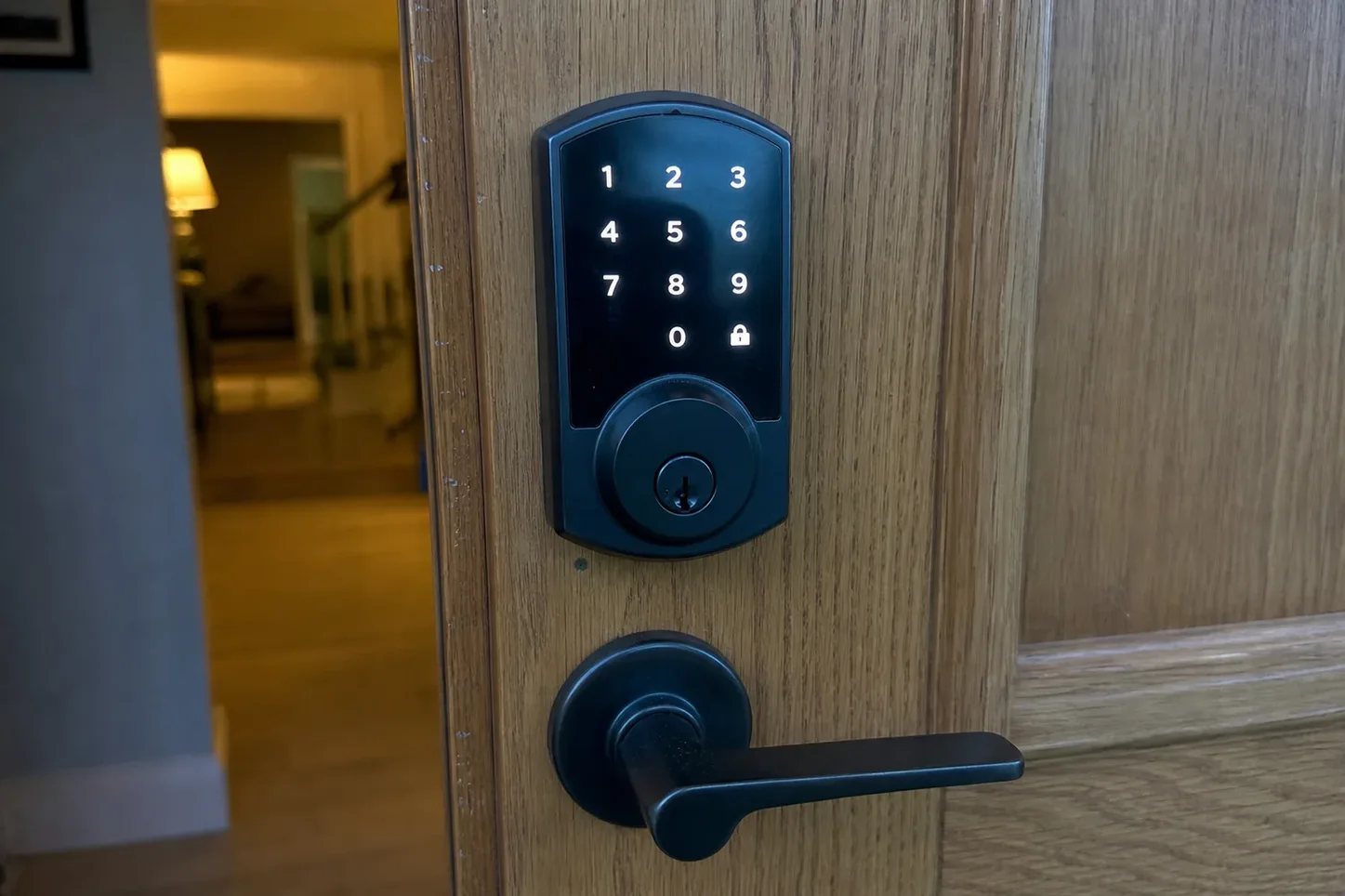
The question is who needs to get in, and how. A keypad deadbolt handles codes at the door and works with no phone or internet at all. For many households that covers everything.
An app-connected lock goes further: it can unlock the door for a visitor while you are at work, send a note when a code is used, and keep a record of who came in. Some connect over the home Wi-Fi, some only over Bluetooth when a phone is close, and some need a small bridge plugged in nearby.
A retrofit unit replaces just the inside half of an existing deadbolt. The outside keeps its current look and key, which suits homes where the hardware is good and the owners like it as it is. Whichever kind you choose, it normally fits the holes already cut in the door.
For people who spend the day in an office or lab off the highway, the app is the part they use most. A message when the kids punch in their code after school, a way to let the plumber in at two o'clock, and an auto-lock that throws the bolt a minute after the door closes take a lot of small worries off the day.
The activity log is handy too. If a code shows up at an hour it should not, you know whose it was and can delete it from your phone without anyone coming back to the house.
Auto-lock also covers the door that gets left on the latch when the last person leaves in a hurry. If you would rather it stay open while someone is home, the timing can be shortened, lengthened or turned off.
Many houses here have wood doors that have spent decades swelling in summer and shrinking in winter. A motorized bolt needs a door that closes on its own and a strike the bolt can slide into without pressure, so the door is trued and the strike moved if needed before anything else. Weatherstripping that presses hard on the latch side can also hold a bolt back, so it gets checked at the same time.
Storm doors are common on these houses, and the keypad has to fit in the space between the storm door and the main door. That gap is measured first, and a slimmer keypad or a different mounting is chosen when it is tight. Doors with an older lock set deep in the edge take different hardware from round deadbolts, and only some smart locks suit them.
Most homes need a single visit, with everything working before the technician leaves.
Which door, who will use it, and whether anyone wants the app or only the keypad.
Thickness, holes, storm door clearance and how freely the bolt moves.
The lock that suits the door, the reasons, and nothing ordered until you agree.
Codes entered with you, the app paired if wanted, and the keys handed over.
In a condo complex, your unit door is yours to change, and a keypad there means guests and family can be let in without anyone copying a key. Building entrances, garage gates and the mailroom belong to the association, so locks on those stay with the people who manage the property.
Some associations have rules about what a unit door may look like from the hallway. The condo documents or the manager will say whether a keypad is allowed and in which finish, which is worth knowing before a lock is picked.
If you rent the unit, the owner's OK comes first, and the owner usually keeps a code of their own for maintenance and emergencies.
Smart locks run on batteries that sit in the inside half of the lock. They give warnings well before they run out, with a light or a beep at the keypad and a message in the app, and cold snaps can bring that warning sooner than expected. Changing them at the first warning, instead of waiting for the keypad to fail, keeps winter mornings uneventful.
Every lock we install keeps its key cylinder, so a key still opens the door if the batteries run out. If the key is inside too, call: the technician confirms the home is yours with an ID or a lease, opens the door, and looks at why the batteries emptied so quickly.
Usually the one the household uses every day, which in many homes is the mudroom, side or garage door rather than the front.
Usually, yes. The gap between the two doors is measured first, and a slimmer keypad is chosen if the space is tight.
No. The keypad works at the door on its own. Wi-Fi only adds remote unlocking, alerts and the activity log.
With an app-connected lock, yes. You unlock the door from your phone or give that person a code for the day.
Yes. Most keypad locks hold a list of codes, so family members, a sitter and a cleaner each get their own, and any one of them can be removed on its own.
Your unit door is usually yours to change, but some associations set rules about how it looks from the hallway. The condo documents or the manager will say.
The key still opens the lock. If the key is locked inside as well, call, and once it is clear the home is yours the door is opened.
With a retrofit unit, yes. Only the inside half of the deadbolt changes.
Yes. The door is looked at, the options explained, and the free estimate comes before any work.
Call us and we get a tech out to you.